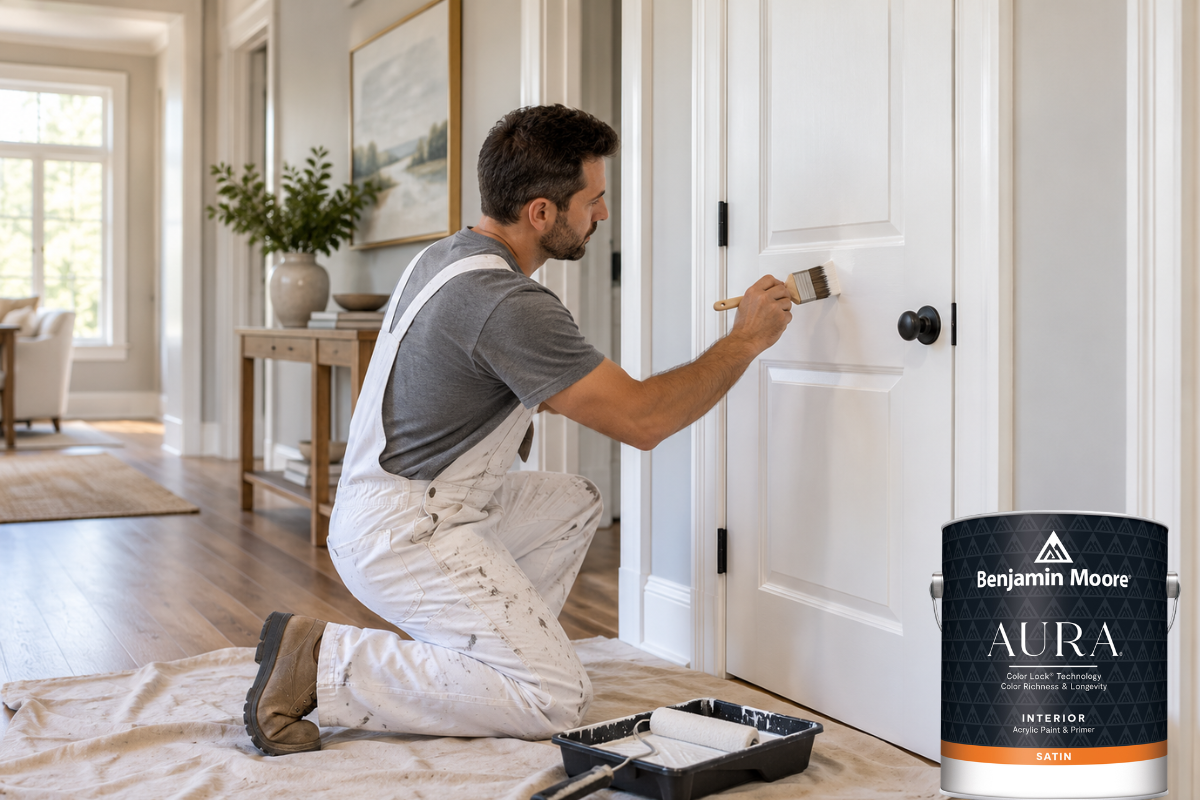
This blog, “How to paint interior doors for a high-end look,” comes down to preparation, product choice, application technique, and finish. Interior doors are highly visible architectural elements, and even a little brush drag, uneven sheen, or poor surface preparation can make the final result look less polished. A professional-looking door should have a smooth, even finish with crisp edges and consistent coverage from top to bottom.
Benjamin Moore ADVANCE Interior Paint is a strong choice for this type of project because it is designed for trim, doors, and cabinetry and provides a durable, furniture-like finish. It is especially useful when the goal is a refined look rather than a standard wall-paint finish.
What Is the Best Way to Prepare Interior Doors for Paint?
Preparation is the most important part of the job. Before painting, remove or protect the hardware. When practical, remove knobs, levers, strike plates, and hinges to keep lines clean and prevent paint from collecting around metal edges.
Next, clean the door thoroughly. Hand oils, dust, residue, and household cleaners can interfere with adhesion, especially around handles and door edges. Inspect the surface for dents, scratches, chips, or damaged areas. Fill imperfections with an appropriate patching compound, let the repairs dry, then sand them smooth.
Previously painted doors should also be lightly sanded to dull glossy surfaces and improve adhesion. The goal is not to remove all of the old paint. The surface should simply feel smooth, clean, and slightly de-glossed before primer or finish paint is applied. After sanding, remove all dust with a vacuum and a clean, lint-free cloth.
Should Interior Doors Be Primed Before Painting?
Primer is especially important when the existing surface is stained, bare wood, heavily patched, glossy, or being changed from a dark color to a lighter one. Primer can also help create a more uniform surface when a door has multiple repaired areas or inconsistent absorption.
When painting over a sound, previously painted finish, a separate primer may not always be necessary, but the existing coating should still be clean, dull, and properly prepared. If there is any uncertainty about adhesion, staining, or the existing coating, priming is the safer approach.
Why Use Benjamin Moore ADVANCE Interior Paint on Doors?
Benjamin Moore ADVANCE Interior Paint is well suited for doors because it is formulated for high-contact surfaces such as trim, cabinetry, and millwork. Its leveling characteristics help reduce visible brush and roller marks, which is important when trying to achieve a more refined finish.
It also dries to a hard, durable coating that can handle frequent use better than a standard wall paint. ADVANCE is a particularly good option for doors because it combines the application characteristics needed for detail work with a smoother, more furniture-like result.
What Paint Sheen Is Best for Interior Doors?
For most interior doors, satin or semi-gloss are the best choices. Satin gives the door a softer, more contemporary appearance. It reflects less light than semi-gloss, which can make surface imperfections less noticeable while still being durable and easy to clean.
Semi-gloss creates a more traditional, crisp finish with greater reflectivity. It is especially useful in homes where trim and doors are intended to stand out from lower-sheen walls. High-gloss finishes can create a dramatic lacquered look, but they also show nearly every imperfection in the surface, so they are best reserved for very smooth doors with meticulous preparation.
For a high-end look without making the surface overly reflective, satin is often the safest choice.
What Paint Brush Should Be Used for Interior Doors?
A high-quality brush makes a major difference in the final finish. For detailed areas, recessed panels, molding, and door edges, use a 2-inch or 2½-inch angled sash brush.
A quality synthetic brush is typically the best choice with waterborne enamel products such as Benjamin Moore ADVANCE. Look for a brush with fine, flexible bristles that can lay off the paint smoothly without leaving heavy marks.
Professional-grade brushes from brands such as Purdy, Wooster, Corona, or ARROWWORTHY are well suited for this type of work. The angled profile provides better control around panel edges, corners, and hardware openings.
What Roller Is Best for Painting Interior Doors?
A roller can help create a smoother, more consistent finish on the larger flat areas of a door. For interior doors, a 4-inch or 6-inch mini roller is usually easier to control than a full-size roller.
Use a high-density foam roller or a short-nap microfiber roller, generally around a ¼-inch nap, for a smooth surface. Foam can work well on very flat doors, while a fine microfiber cover is often more forgiving and can provide better paint pickup and release.
The goal is to apply a thin, even coat without creating stipple, heavy texture, or roller lines.
Should You Brush or Roll an Interior Door?
In most cases, the best result comes from using both. Use the brush first for recessed panels, molded details, and edges. Then use the mini roller on the larger flat areas while the paint is still wet.
This technique keeps the finish consistent while reducing visible brush marks. Avoid repeatedly going back over areas that have already begun to set. Overworking partially dried paint can create drag marks, texture, and uneven sheen.
What Order Should You Paint a Paneled Interior Door?
A consistent painting sequence helps prevent lap marks and uneven buildup. Start with the recessed panels and detailed molding around them. Then move to the horizontal rails, followed by the vertical stiles. Finish with the outer edges.
Work in manageable sections and maintain a wet edge. For slab doors, the process is simpler. Apply paint evenly from top to bottom, then lightly lay off or roll the surface in one direction for a uniform appearance.
How Many Coats of Paint Do Interior Doors Need?
Two finish coats are usually recommended for the best color depth and durability. The first coat establishes coverage, while the second evens out the sheen and gives the surface a more complete, professional appearance.
Dark colors may require especially careful application to avoid unevenness, particularly over a light base. Allow each coat to dry fully, per the product instructions, before re-coating. Rushing the second coat can interfere with leveling and may leave the finish softer for longer.
Can Interior Doors Be Painted Dark Instead of White?
Yes. Dark interior doors can create a sophisticated architectural effect and add contrast to otherwise neutral rooms. Instead of traditional white, consider Benjamin Moore shades such as Wrought Iron 2124-10, Hale Navy HC-154, or Kendall Charcoal HC-166.
Wrought Iron 2124-10 is a deep charcoal with a softer appearance than true black. It works well in modern, transitional, and classic interiors and pairs beautifully with warm whites, greiges, natural wood, black hardware, and brass accents.
Hale Navy HC-154 adds rich color without feeling overly bold. It works especially well in entryways, hallways, offices, bedrooms, and homes with coastal or traditional influences. Pair it with soft white trim, medium wood floors, and warm metal finishes.
Kendall Charcoal HC-166 is a versatile deep neutral that can make interior doors feel substantial and custom. It works especially well with warm neutral walls, natural wood flooring, creamy whites, and muted greens.
Should the Door and Trim Be the Same Color?
They can be, but they do not have to be. Painting the door and trim the same color creates a more seamless, architectural look, while painting the door darker than the trim creates stronger contrast and makes the door a focal point.
For example, Wrought Iron or Hale Navy doors with White Dove OC-17 trim can create a crisp, finished look. If the walls and trim are already light, a dark door can add depth without requiring major changes to the room.
How Do You Avoid Brush Marks and Roller Texture?
Smooth application starts with thin, even coats. Do not overload the brush or roller. Apply enough paint to cover the surface, but avoid heavy buildup around panel edges and corners.
Work efficiently and stop brushing or rolling once the paint begins to set. Good lighting is also important because side lighting makes it easier to see missed spots, lap marks, and texture while the paint is still wet.
Proper drying time between coats is just as important as the application itself.
Should Interior Doors Be Painted On or Off the Hinges?
Either method can work. Painting a door on the hinges is faster and avoids handling a freshly finished door, which is practical for many residential repainting projects.
Removing the door allows better access to all edges and can make it easier to achieve a more controlled finish. For higher-end work, especially when multiple doors are being refinished, removing them and setting up a dedicated painting area may provide the cleanest result.
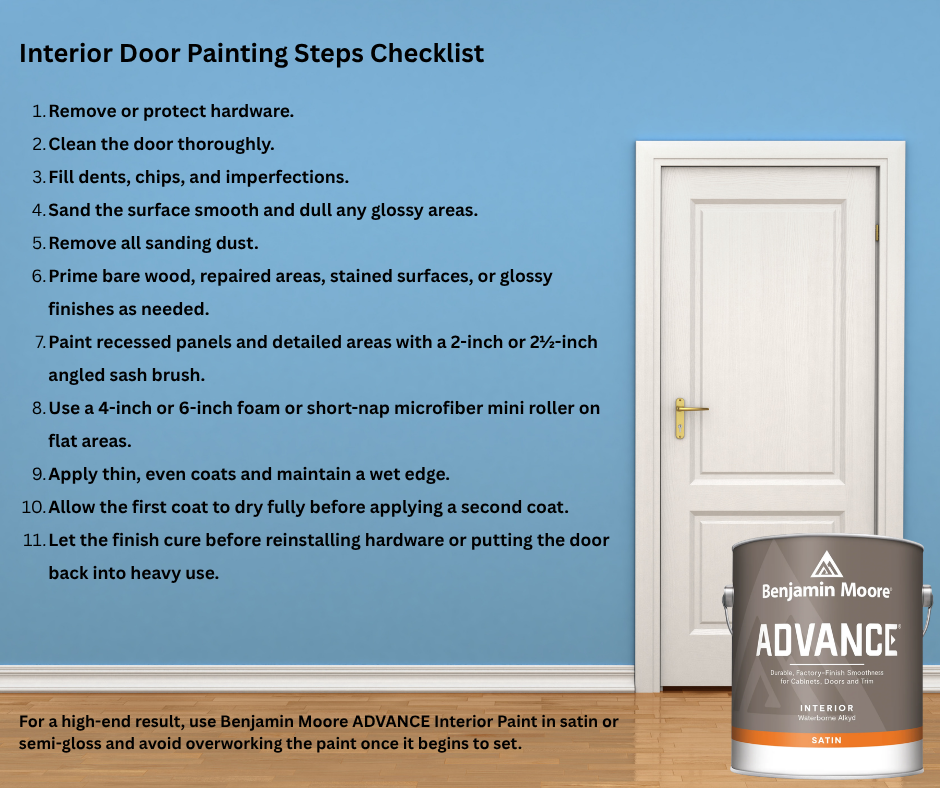
Interior Door Painting Steps Checklist
Start by removing or protecting the hardware, then clean the door thoroughly to remove dust, grease, and fingerprints. Fill any dents, chips, or imperfections, sand the repairs smooth, and lightly sand glossy surfaces so the new coating can adhere properly. Remove all sanding dust before moving on.
Prime bare wood, repaired areas, stained surfaces, or glossy finishes as needed. Once the primer is dry, use a 2-inch or 2½-inch angled sash brush for recessed panels, molding, and detailed areas. Use a 4-inch or 6-inch foam or short-nap microfiber mini roller on the larger flat sections of the door.
Apply thin, even coats and maintain a wet edge as you work. Avoid repeatedly brushing or rolling areas once the paint begins to set. Let the first coat dry fully before applying the second, then give the finish enough time to cure before reinstalling hardware or putting the door back into heavy use.
For a high-end result, Benjamin Moore ADVANCE Interior Paint in satin or semi-gloss is a strong choice for interior doors.
How Do You Get a Professional-Looking Finish on Interior Doors?
A high-end finish comes from treating the door like millwork rather than like a wall. The process should include careful cleaning, sanding, repairing, priming when needed, and applying thin, even coats with quality tools.
Benjamin Moore ADVANCE Interior Paint, paired with a professional-grade angled sash brush and a fine-finish mini roller, can deliver a smooth, durable result. Choosing the right sheen is equally important. Satin offers a softer, refined appearance, while semi-gloss creates more contrast and a traditional trim-like finish.
Visit Kucker Haney Paint for Interior Door Painting Supplies
Interior doors can become an important design feature when the color, sheen, and finish are chosen carefully.
Visit Kucker Haney Paint in Princeton, East Windsor, or Hamilton for Benjamin Moore ADVANCE Interior Paint, primers, paint samples, and professional-grade brushes and rollers from trusted brands such as Purdy, Wooster, Corona, ARROWWORTHY, and Whizz.
Whether you want a classic white door or a more dramatic look with Wrought Iron 2124-10, Hale Navy HC-154, or Kendall Charcoal HC-166, proper prep and the right tools can make the finished door look cleaner, smoother, and more custom.