
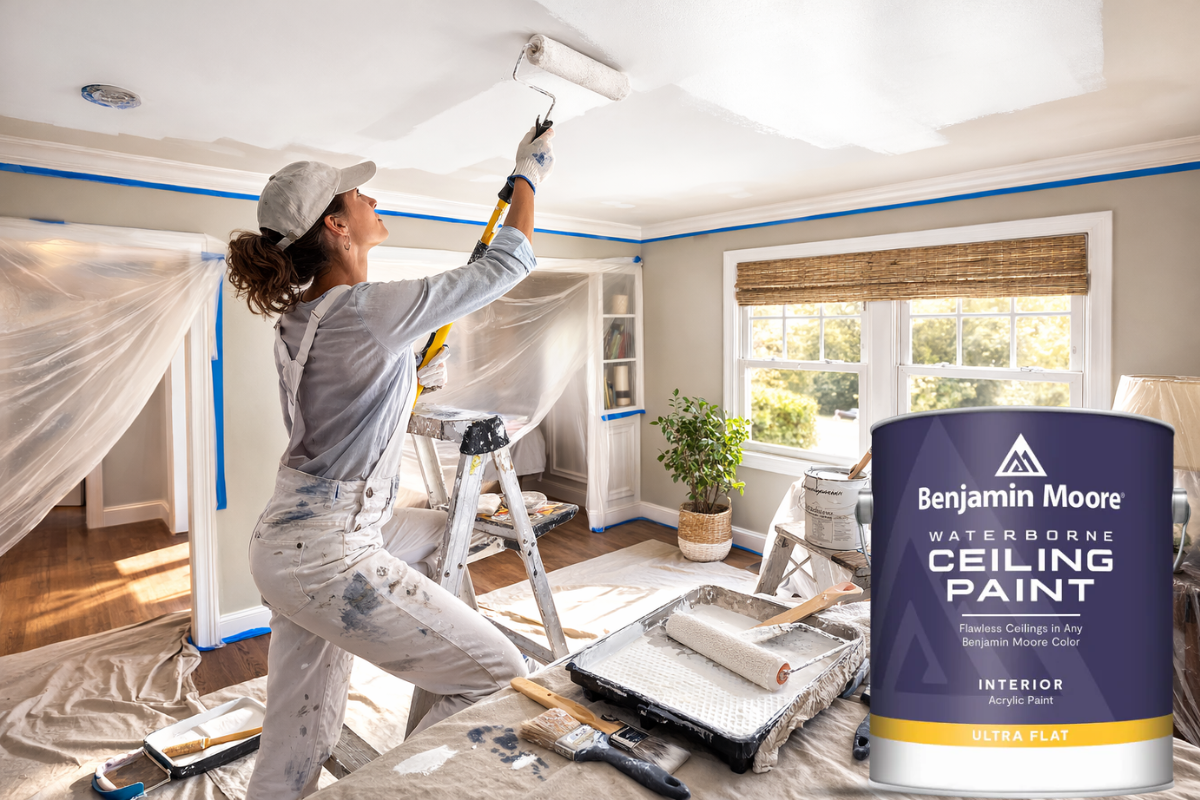
Many homeowners assume ceiling painting is a job best left to professionals, but how to paint a ceiling like a pro (even if you’re not one) is absolutely achievable with the right preparation, tools, and technique. While ceilings can feel intimidating because of drips, streaks, and uneven coverage, a flawless finish comes down to using quality products and following proven steps. With Benjamin Moore Waterborne Paint or Benjamin Moore Muresco® Ceiling Paint, along with the proper rollers, drop cloths, and brushes available at Kucker Haney Paint, anyone can confidently tackle this project. This guide will help you learn how to paint a ceiling like a pro (even if you’re not one).
What Is the Best Paint to Use for Ceilings?
Ceilings require a paint formulated specifically for overhead application. Benjamin Moore Muresco® Ceiling Paint is designed with a flat finish that minimizes glare and hides surface imperfections. Its excellent coverage helps reduce the number of coats needed.
For spaces that may need additional durability, Benjamin Moore Waterborne Paint offers reliable coverage and a smooth finish while maintaining low odor and easy cleanup. Choosing a high-quality ceiling paint makes a noticeable difference in both appearance and ease of application.
What Supplies Do You Need to Paint a Ceiling?
Preparation is key to avoiding mess and frustration. Before starting, gather the following supplies:
Benjamin Moore Muresco® Ceiling Paint or Benjamin Moore Waterborne Paint
⅜” to ½” nap roller covers (depending on ceiling texture)
Extension pole for even, controlled rolling
Angled brush for cutting in edges
Drop cloths to protect floors and furniture
Painter’s tape
Ladder
Paint tray and liner
All rollers, drop cloths, brushes, trays, and preparation supplies can be purchased at Kucker Haney Paint, making it easy to get everything needed in one stop.
How Do You Prepare a Ceiling for Painting?
Proper prep ensures a smooth, streak-free result:
Clear the room as much as possible and cover remaining furniture with drop cloths.
Clean the ceiling to remove dust, cobwebs, or stains.
Repair cracks or nail pops with lightweight spackle and lightly sand smooth once dry.
Tape off trim and walls for clean edges.
Skipping preparation often leads to uneven texture or visible imperfections, so taking the time upfront makes a major difference.
What Is the Best Technique for Rolling a Ceiling?
Start by cutting in around the perimeter with an angled brush. Work in small sections to keep a wet edge.
When rolling:
Use a fully loaded roller, but avoid oversaturation to prevent drips.
Roll in overlapping strokes, maintaining consistent pressure.
Work in one direction for the first coat.
For the second coat, roll perpendicular to the first for even coverage.
An extension pole helps maintain even pressure and reduces fatigue, leading to smoother results.
How Do You Avoid Streaks and Lap Marks?
Streaks typically occur when paint dries unevenly. To prevent this:
Keep a wet edge at all times.
Work quickly but methodically.
Avoid overworking partially dried areas.
Ensure proper lighting so missed spots are visible before paint dries.
Benjamin Moore Muresco® Ceiling Paint is formulated to reduce lap marks, helping homeowners achieve a uniform finish.
How Long Should Ceiling Paint Dry?
Ceiling paint typically dries to the touch within a few hours, but full drying time depends on humidity and airflow. Allow adequate drying time between coats for best results. Proper ventilation speeds up the process while maintaining finish quality.
You Don’t Need to Be a Professional to Get Professional Results
Painting a ceiling does not require professional training—just the right products, tools, and technique. By using Benjamin Moore Waterborne Paint or Benjamin Moore Muresco® Ceiling Paint, and following these proven tips, homeowners can achieve a flawless ceiling with confidence.
Visit Kucker Haney Paint for expert advice and to purchase all necessary rollers, drop cloths, brushes, and supplies to complete your ceiling project successfully.