
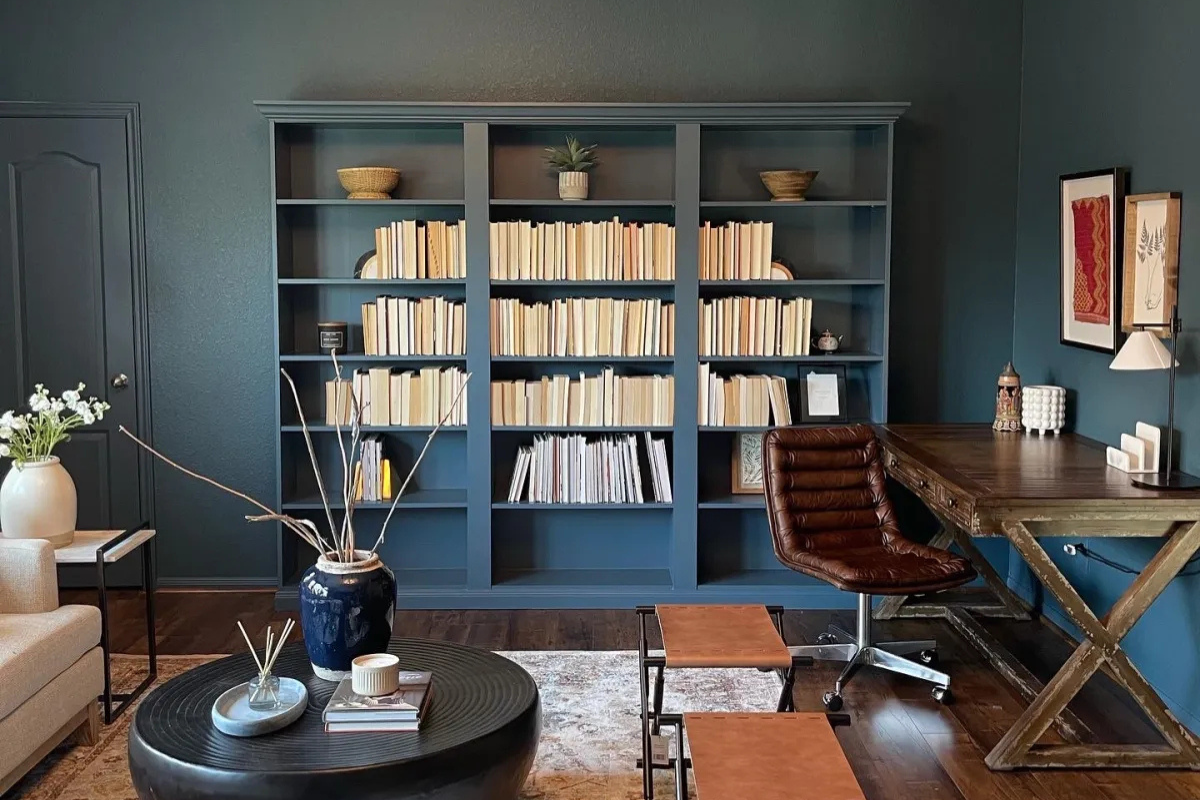
How Can You Use Dark Paint Colors in Small Spaces Without Making Them Feel Smaller? It is one of the most common paint questions homeowners ask, and it is easy to understand why. Many people assume a small room should always be painted a light color, but dark paint can actually add depth, character, and a polished designer look when it is used the right way. Dark paint colors can bring drama, luxury, and a cozy sense of intimacy to a room. Small-space design shows that bold color can work beautifully in compact areas.
Do dark paint colors make a small room look smaller?
Not necessarily. One of the biggest myths in decorating is that dark walls automatically shrink a room. In reality, a small room is already small, and using a rich, enveloping color can blur edges, soften hard boundaries, and create a more intentional look instead of calling attention to the room’s size. Dark paint is especially effective when the goal is mood, contrast, or sophistication rather than simply trying to make the room appear larger.
That said, dark paint does absorb more light. The best results usually come from pairing deep wall color with good lighting, the right finish, and thoughtful accents.
Which small rooms look best with dark paint?
Some of the best places to use dark paint are the rooms that do not need to feel bright and expansive all day long. Small powder rooms, dining nooks, home offices, guest bedrooms, entryways, reading corners, and even narrow hallways can all benefit from deeper color. These spaces often feel more finished and more memorable when they lean into a moody, cocoon-like look instead of fighting their compact size.
A powder room is one of the easiest places to go dark. Because it is a smaller, enclosed room used for shorter periods of time, it can handle dramatic color exceptionally well. A dark green like Essex Green HC-188 or Vintage Vogue 462 can create a rich, tailored look that feels elevated rather than cramped.
A small bedroom can also benefit from a deeper wall color, especially if the goal is comfort and relaxation. A navy such as Hale Navy HC-154 or Van Deusen Blue HC-156 can make the room feel restful and refined, particularly when balanced with crisp bedding and lighter trim.
A compact home office is another strong candidate. Dark walls can reduce visual distraction and create a more grounded workspace. Kendall Charcoal HC-166 is a smart choice for a home office because it feels classic, professional, and versatile with wood furniture, black accents, or warm metallics.
For a small entryway or hallway, a deep tone can make the transition space feel intentional and stylish. Silhouette AF-655 is a refined burnt umber with notes of charcoal, making it a strong inspiration color for smaller pass-through spaces.
What are the best Benjamin Moore dark paint colors for small spaces?
When choosing a dark paint color for a small room, it helps to stay with shades that feel rich but still livable. Some standout Benjamin Moore options include:
Hale Navy HC-154 for bedrooms, offices, and accent walls. It is timeless and dramatic without feeling harsh.
Wrought Iron 2124-10 for modern spaces, doors, built-ins, or a high-contrast accent wall. It delivers the boldness of black with a softer, more usable edge.
Kendall Charcoal HC-166 for home offices, dining nooks, and entryways. It is deep and grounded, but still flexible enough to work with many finishes and styles.
Van Deusen Blue HC-156 for small bedrooms and dens. It adds depth while keeping a traditional, elegant quality.
Essex Green HC-188 and Vintage Vogue 462 for powder rooms, libraries, or statement spaces. These greens feel moody, layered, and especially beautiful with warm woods and brass.
Silhouette AF-655 for hallways, foyers, and sophisticated accent moments. Its chocolate-brown depth can make a compact space feel warm and intentional.
How do you keep a small dark room from feeling too heavy?
The key is balance. Dark walls tend to look best when at least a few other elements lighten the room and help reflect available light. Trim in a soft white, a lighter ceiling, mirrors, layered lighting, natural wood, and lighter upholstery can all keep the space from feeling flat.
Lighting matters more in a dark room than almost anything else. Since deeper colors absorb more light, wall sconces, lamps, overhead fixtures, and even the bulb temperature can change how the room feels from morning to evening. In a small powder room or office, this often makes the difference between cozy and cave-like.
Another smart design move is to consider how much contrast you want. For a classic look, pair dark walls with white trim. For a more immersive, designer-style finish, use the dark color across multiple surfaces so the room feels wrapped in color. In some cases, painting walls, trim, and even built-ins in a coordinated deep shade can make the room feel more seamless because the eye is not stopping at as many visual breaks.
Should you use dark paint on every wall or just one accent wall?
Both approaches can work. A dark accent wall is a good option for someone who wants contrast without fully committing to a moody room.
However, in many small rooms, painting all four walls can actually look better than doing just one dark wall. A single accent wall can sometimes emphasize the room’s short dimensions, while a full-room application creates a more unified effect. This is often why dark colors look so successful in powder rooms, small dens, and compact bedrooms.
What is the best way to choose the right dark color before painting?
Sampling is essential. Testing dark paint colors before making a final decision matters even more in small spaces, where lighting, shadows, and nearby finishes can dramatically affect how the color reads throughout the day.
Dark paint in a small room does not have to feel risky. With the right Benjamin Moore color, the right lighting, and the right styling, a compact space can feel richer, more sophisticated, and far more memorable. For homeowners who want to create a powder room with personality, a bedroom with mood, or a home office with depth, dark color can be one of the smartest design choices in the house.
For help choosing the right Benjamin Moore dark paint color for a small room, visit Kucker Haney Paint and explore shades that bring depth, comfort, and character to every corner of the home.