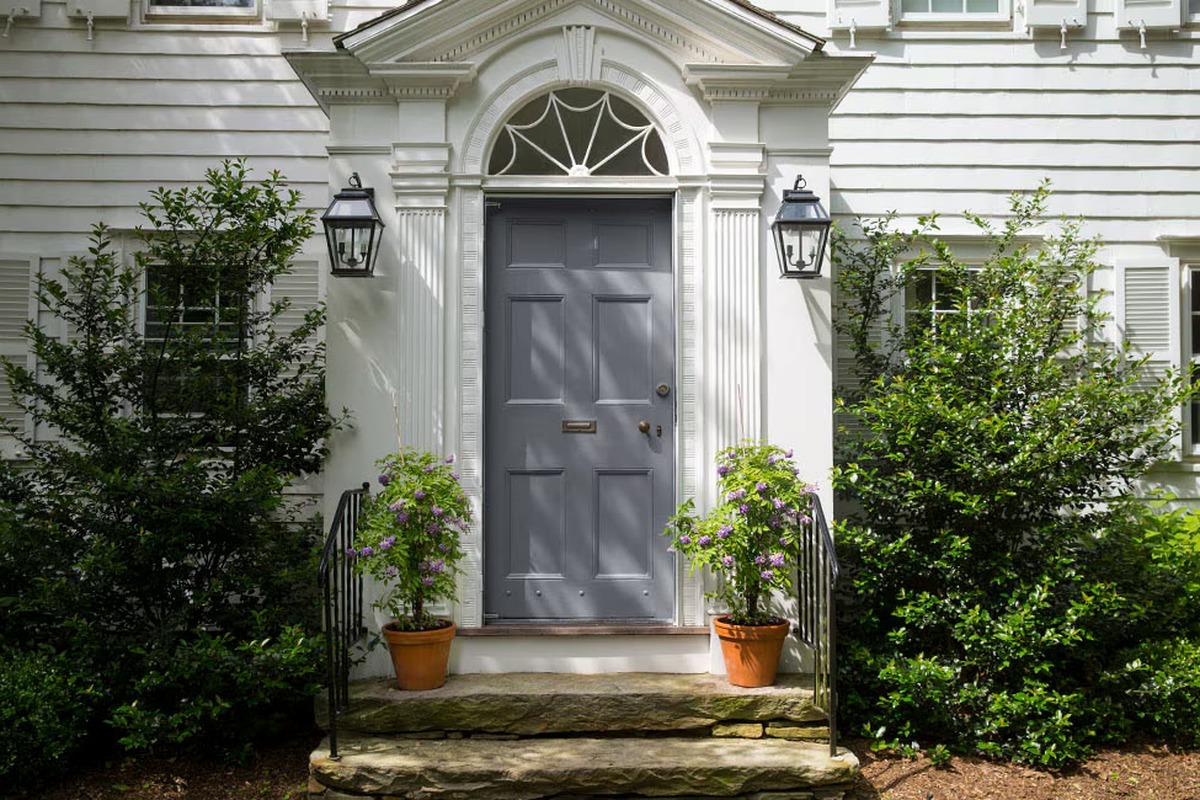
The best paint colors for an entryway should make the space feel welcoming while also connecting naturally with the rest of the home. Entryways often sit between several rooms, so the color needs to work with nearby walls, flooring, trim, furniture, and the front door.
Fall is an especially good time to refresh an entryway because warmer, richer colors feel right at home with seasonal decor and natural materials. Benjamin Moore shades such as Kendall Charcoal HC-166, Saybrook Sage HC-114, Hawthorne Yellow HC-4, and White Dove OC-17 each bring a different character to the space while remaining easy to coordinate with common interior finishes.
What Are the Best Paint Colors for an Entryway?
A successful entryway color should create a strong first impression without feeling disconnected from the rooms beyond it. Warm whites, muted greens, soft yellows, and deeper neutrals are all strong choices because they can add personality while still feeling versatile.
The right color also depends on the size of the foyer and the amount of natural light. A small or darker entryway may benefit from a lighter shade, while a larger space with good lighting can handle a deeper, more dramatic color.
Kendall Charcoal HC-166 for a Sophisticated Entryway
Kendall Charcoal HC-166 is a deep neutral that gives an entryway a polished, dramatic look. It works especially well in foyers with good natural light, white trim, warm wood flooring, or architectural details such as molding and paneling.
Because darker colors can emphasize surface imperfections, preparation is important. Walls should be smooth, properly patched, and carefully sanded before painting.
Kendall Charcoal pairs beautifully with White Dove OC-17 trim, warm wood furniture, brass lighting, and lighter rugs. It can also work well when nearby rooms are painted in softer neutrals, creating contrast without making the transition feel abrupt.
Saybrook Sage HC-114 for a Calm, Natural Look
Saybrook Sage HC-114 is a muted green that feels relaxed, classic, and welcoming. It brings in color without overwhelming the space and works especially well with wood tones, black accents, woven textures, and traditional or transitional furnishings.
For fall, Saybrook Sage is a natural fit because it coordinates beautifully with rust, cream, brown, muted gold, and deep green decor. It also transitions easily into nearby rooms painted in warm whites, greiges, and other soft neutrals.
This shade is a good choice for homeowners who want more personality than a beige or white but still want the entryway to feel timeless.
Hawthorne Yellow HC-4 for Warmth and Brightness
Hawthorne Yellow HC-4 can make an entryway feel cheerful and inviting, especially if the space does not receive much direct sunlight.
Warm yellow tones can help brighten a darker foyer and pair well with classic wood furniture, warm hardwood floors, brass fixtures, soft white trim, and blue or green accents.
The most important consideration with yellow is lighting. A color that looks subtle in daylight may appear stronger under warm artificial light at night. Testing a sample in the actual space is especially important before committing.
White Dove OC-17 for a Soft, Flexible Entryway
White Dove OC-17 is a warm white that works in almost any style of entryway. It creates a clean, bright look without feeling cold or stark.
This color is especially useful in smaller entryways, spaces with limited natural light, or foyers where the front door, artwork, furniture, or flooring should be the focal point.
White Dove also works beautifully as a trim color with deeper shades like Kendall Charcoal or Saybrook Sage. For a simple, classic look, White Dove walls can be paired with a darker front door, natural wood furniture, and a patterned runner.
How Does Lighting Affect Entryway Paint Colors?
Lighting has a major influence on how paint colors appear. Entryways often have a combination of natural light from sidelights or windows and artificial light from overhead fixtures.
North-facing spaces may make colors appear cooler, while south-facing spaces often bring out warmer undertones. Artificial lighting can shift color again in the evening.
Before choosing a final shade, it is helpful to view samples in morning light, afternoon light, and at night. The color should also be checked with the front door both open and closed, since that can significantly change the amount of natural light in the space.
How Should Trim and Nearby Rooms Affect the Color Choice?
Trim is one of the easiest ways to create consistency throughout a home. Keeping the same trim color in the entryway and adjoining rooms helps the spaces feel connected.
White Dove OC-17 creates a softer contrast and works especially well with warm or muted wall colors. Chantilly Lace OC-65 offers a crisper, brighter look that suits more modern interiors.
Nearby rooms should also influence the entryway palette. The colors do not need to match, but they should relate through undertone, warmth, or repeated accent colors.
Saybrook Sage flows well into warm neutral spaces. Kendall Charcoal works best when nearby rooms are lighter. Hawthorne Yellow pairs well with greens, warm whites, and traditional neutrals. White Dove can connect almost any palette.
How Does the Front Door Color Affect an Entryway?
The inside of the front door is part of the entryway design, so its color should be considered along with the walls. 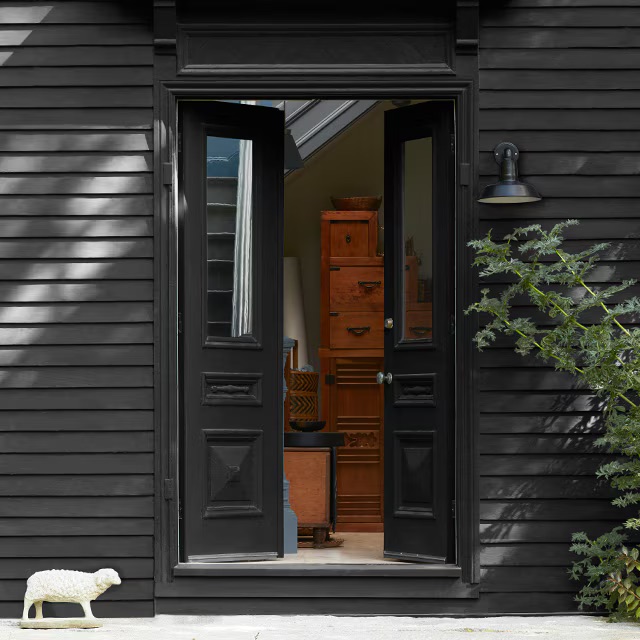
A black or charcoal door pairs well with White Dove or Saybrook Sage walls. A deep green door looks especially good with warm white or soft neutral walls. Navy can work beautifully with White Dove, Hawthorne Yellow, or a light greige. Natural wood doors coordinate easily with Saybrook Sage, Kendall Charcoal, and White Dove.
If both the walls and the door are dark, the room should have enough lighting to keep the space from feeling heavy.
What Paint Finish Is Best for an Entryway?
Because entryways are high-traffic spaces, paint finish matters almost as much as color.
For walls, an eggshell or satin finish is usually a practical choice. Eggshell offers a soft, low-sheen look while still providing more washability than flat paint. Satin has a bit more sheen and is a good option for busy households, narrow foyers, or entryways where walls are more likely to be touched or scuffed.
For trim, baseboards, doors, and molding, satin or semi-gloss is typically the better choice. These finishes are easier to clean and help architectural details stand out against the wall color.
A deeper shade like Kendall Charcoal can look especially elegant in a lower-sheen wall finish, while White Dove trim in satin or semi-gloss creates a subtle contrast in both color and sheen.
If the front door is being painted, a satin or semi-gloss finish can provide the durability needed for frequent use while giving the door a more finished, polished appearance.
How Can Decorating Make an Entryway Feel More Welcoming?
Paint creates the foundation, but the finishing details help the space feel complete. A runner, console table, mirror, bench, woven basket, or warm light fixture can add both function and style.
For fall, natural textures and warm materials pair especially well with these Benjamin Moore colors. Wood, brass, woven fibers, soft cream textiles, and seasonal greenery can add warmth without making the space feel overly decorated.
The goal is to keep the entryway inviting and uncluttered.
Which Benjamin Moore Entryway Color Is the Best Choice?
The best choice depends on the mood and lighting of the space.
Kendall Charcoal HC-166 is ideal for a dramatic, sophisticated look.
Saybrook Sage HC-114 creates a calm and natural feel.
Hawthorne Yellow HC-4 adds warmth and brightness.
White Dove OC-17 offers the most flexibility and works well in almost any size or style of entryway.
The best paint colors for an entryway should work with the space as a whole, including the lighting, trim, flooring, nearby rooms, front door, and the finish used on each surface.
Visit Kucker Haney Paint for Entryway Color Inspiration
Before making a final decision, test Benjamin Moore samples in the actual entryway and view them at different times of day.
Visit Kucker Haney Paint in Princeton, East Windsor, or Hamilton to explore Benjamin Moore paint colors, compare samples, and find the right paint, finishes, and supplies for an entryway refresh.
A well-chosen color and finish can make the entrance to a home feel warmer, more polished, and more connected to the rooms beyond it.